


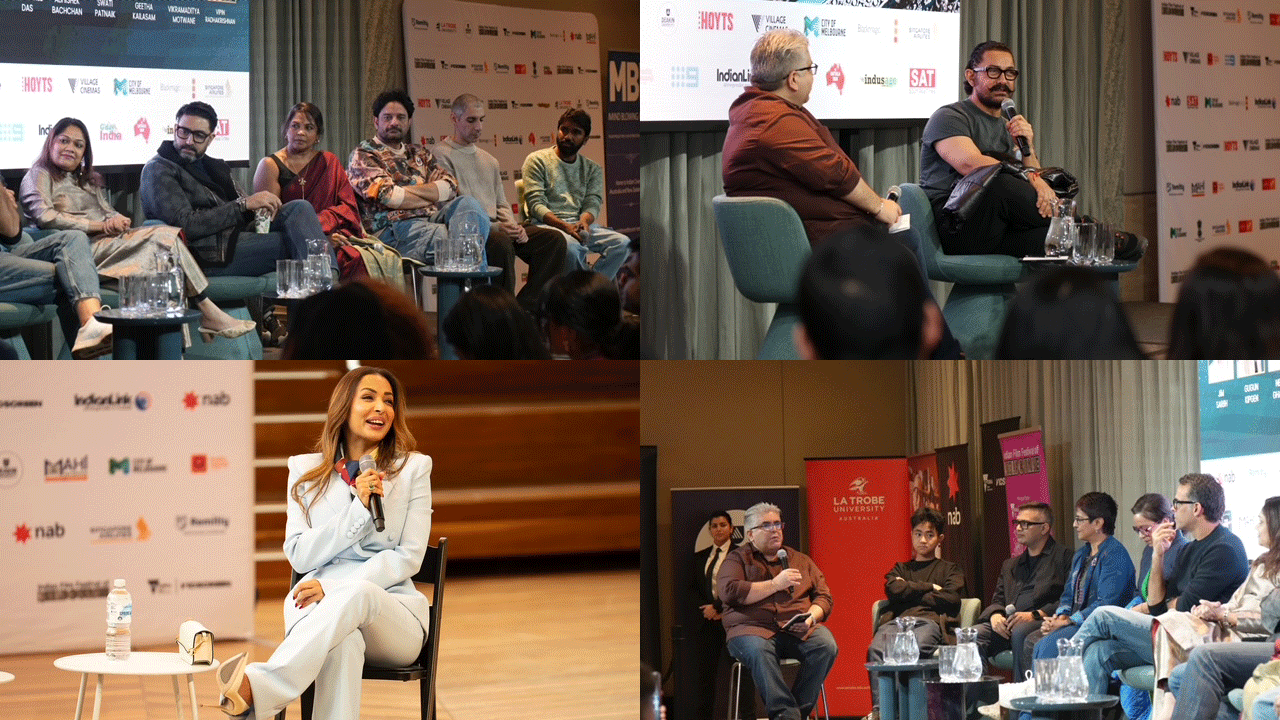
The Indian Film Festival of Melbourne (IFFM) has steadily transformed into far more than a film festival. While screenings remain at the centre of the event, the conversations surrounding the films have become equally influential. Over the years, IFFM has emerged as a cultural meeting point where cinema intersects with identity, migration, storytelling, politics, inclusion, and creativity.
Officially founded in 2010, IFFM has grown into the largest annual celebration of Indian cinema outside India. The festival’s vision has consistently focused on diversity, cultural exchange, and meaningful storytelling. More recently, however, its live conversations, industry chats, and audience interactions have started defining the experience itself.
Official Website:
https://iffm.com.au/
Wikipedia:
https://en.wikipedia.org/wiki/Indian_Film_Festival_of_Melbourne
What makes IFFM unique is that audiences do not just watch actors and filmmakers from a distance. They engage with them directly. The festival creates spaces where audiences sit in the same room as directors, writers, actors, producers, comedians, critics, musicians, and casting directors.
In the last few years, the “IFFM Chats” format has become one of the festival’s biggest highlights. These sessions have featured candid conversations, masterclasses, and interactive audience events with major names from Indian cinema and entertainment.
IFFM Chats
https://www.iffm.com.au/iffm2024/website/iffm-chats.html
The last few editions particularly showcased how IFFM is positioning itself as an ideas festival. Conversations featuring Aamir Khan, Kartik Aaryan, Parvathy Thiruvothu, Kabir Khan, Imtiaz Ali, Anurag Kashyap drew audiences interested not just in celebrity appearances, but in understanding creative journeys and industry shifts.
A major reason these conversations resonate is because they move beyond promotional interviews. Discussions at IFFM often focus on representation, women in cinema, migrant stories, disability, sexuality, regional storytelling, and the future of Indian content globally.
One of the strongest examples of this evolution was “My Melbourne,” an Indo Australian collaborative anthology that premiered at IFFM in 2024.
My Melbourne:
https://en.wikipedia.org/wiki/My_Melbourne
The project brought together filmmakers including Imtiaz Ali, Kabir Khan, Rima Das, and Onir to tell stories around race, gender, disability, sexuality, and belonging. The film reflected everything IFFM has increasingly come to represent: not just entertainment, but dialogue.
Founder and festival director Mitu Bhowmick Lange has played a major role in shaping this direction.
Mitu Bhowmick Lange:
https://en.wikipedia.org/wiki/Mitu_Bhowmick_Lange
Under her leadership, IFFM has continuously expanded into conversations around diversity and inclusion. Over the years, the festival has welcomed guests including Shah Rukh Khan, Aamir Khan, Vidya Balan, Rani Mukerji, Ram Charan, Malaika Arora, Vir Das, Rajeev Masand, Kabir Khan, Tillotama Shome, Jim Sarbh, Shoojit Sircar, Ashwiny Iyer Tiwari, and many others.
The festival’s themes themselves often reflect larger social conversations. In 2016, the festival focused heavily on women empowerment.
In 2017, diversity became a key theme, with films from more than 20 languages showcased across the festival.
Reference:
https://www.edristi.in/hi/%E0%A4%B9%E0%A5%8B%E0%A4%AE/indian-film-festival-melbourne-iffm-2017/
More recently, IFFM has expanded its conversations through networking and industry focused initiatives like IFFM Baari, designed to connect emerging South Asian creatives with industry leaders.
The festival’s digital presence has also amplified these conversations globally through YouTube interviews, reels, and social content.
IFFM YouTube:
https://www.youtube.com/playlist?list=PL_ga7tk0VPAvzr0hSYJhC145hwc_Ninz3
In 2025, the festival continued pushing cultural conversations further. IFFM announced tributes celebrating 100 years of legendary filmmaker Guru Dutt while also honouring Ritwik Ghatak’s cinematic legacy.
Guru Dutt Tribute:
https://timesofindia.indiatimes.com/entertainment/indian-film-festival-of-melbourne-celebrates-guru-dutts-cinema-with-special-screenings/articleshow/122339486.cms
Ritwik Ghatak Tribute:
https://timesofindia.indiatimes.com/entertainment/bengali/movies/news/indian-film-festival-of-melbourne-2025-to-honor-legendary-filmmaker-ritwik-ghatak-on-his-birth-centenary/articleshow/122968984.cms
IFFM has also continued spotlighting underrepresented voices. The inclusion of the restored LGBTQ themed film “Badnam Basti” in the 2025 edition reinforced the festival’s commitment to inclusivity and representation.
The atmosphere surrounding the festival increasingly resembles a cultural summit. Press conferences, conversations, networking evenings, live interactions, comedy, dance events, and industry sessions all contribute to making IFFM a year on year destination for dialogue.
Coverage around the 2025 edition highlighted appearances from Aamir Khan, Gauri Spratt, Vir Das, Jim Sarbh, Tillotama Shome, Malaika Arora, Shoojit Sircar, and Ashwiny Iyer Tiwari.
What makes these conversations important is that they create access. Young filmmakers get to ask questions. Audiences hear directly from artists. Regional cinema gets equal space alongside mainstream Bollywood. Difficult subjects become discussable.
In many ways, IFFM has become one of the few Indian film festivals internationally where conversations feel as significant as premieres.
That shift matters.
Because today, audiences are not only looking for films. They are looking for context, perspective, interaction, and community. IFFM understands that modern film culture is built through dialogue as much as through cinema itself.
And that is exactly why the conversations happening at IFFM may ultimately become its biggest legacy.