


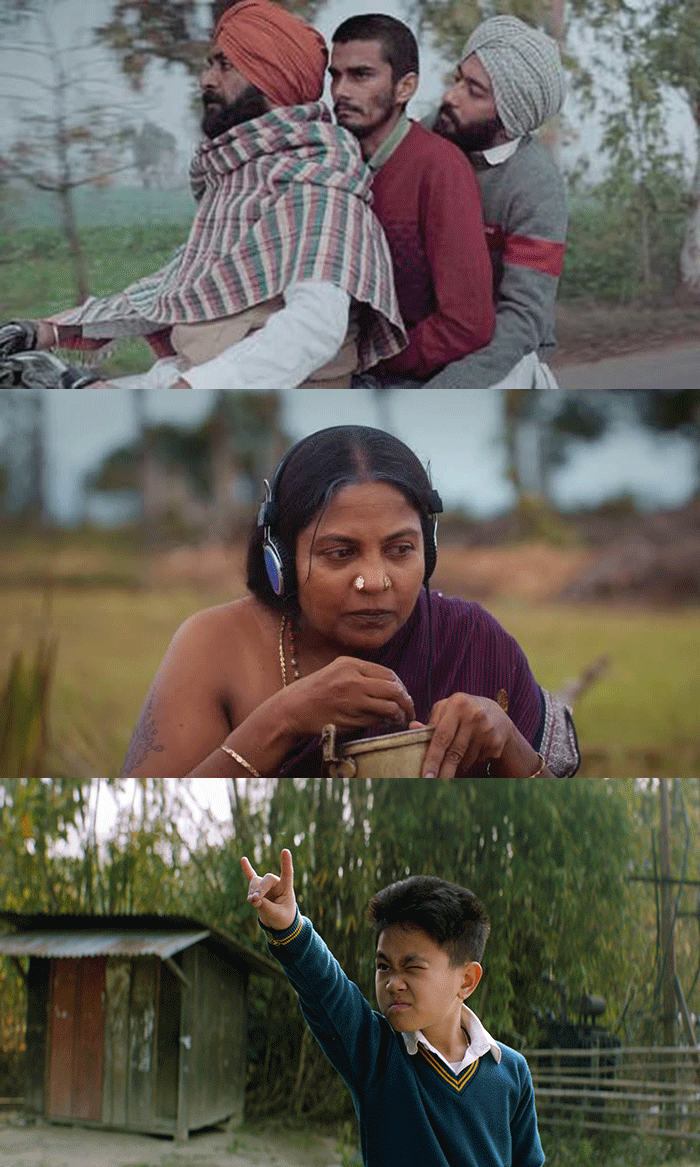
For decades, global audiences often viewed Indian cinema through a single lens. But step into the Indian Film Festival of Melbourne and that lens widens dramatically.
IFFM has steadily built a platform where Tamil, Malayalam, Marathi, Assamese, Punjabi, Bengali, Odia and Kannada cinema stand shoulder to shoulder. It does not treat regional films as niche additions. Instead, it positions them as central to understanding contemporary India.
Over the years, this commitment has reshaped how international audiences experience Indian storytelling.
Tamil Cinema: Urgency, Politics and Emotional Scale
Tamil cinema has long combined popular appeal with social commentary. At IFFM, this balance has been showcased repeatedly through powerful selections. Films such as Super Deluxe and Jai Bhim travelled strongly across global circuits, resonating with audiences for their layered narratives and moral clarity.
More recently, Angammal added to that growing presence. Rooted in character and landscape, the film demonstrated how specificity strengthens universality. Through these selections, IFFM has framed Tamil cinema as globally relevant and artistically ambitious.
Malayalam Cinema: Intimate Stories with Global Echo
Malayalam cinema’s international rise has been built on writing driven storytelling and emotional realism.
IFFM audiences have encountered the raw intensity of Jallikattu, the quiet resistance within domestic spaces in The Great Indian Kitchen, and the layered masculinity explored in Kumbalangi Nights.
These films thrive on nuance rather than spectacle. In Melbourne’s theatres, they have sparked conversations that extend far beyond language barriers.
Marathi Cinema: Social Reflection and Artistic Depth
Marathi cinema has consistently engaged with complex questions of justice, identity and artistic pursuit.
When Court began its international journey, it marked a turning point for regional independent filmmaking. Sairat crossed linguistic and cultural boundaries, while The Disciple offered a meditative exploration of artistic devotion.
IFFM’s programming has consistently reinforced Marathi cinema’s position within global arthouse discourse.
Assamese and Northeast Voices: Expanding the Frame
One of IFFM’s most meaningful contributions has been amplifying stories from India’s Northeast.
Village Rockstars introduced global audiences to the rhythms of rural Assam. Bulbul Can Sing, directed by Rima Das, continued that lyrical storytelling.
More recently, Boong brought Manipuri narratives into the festival space, reinforcing IFFM’s commitment to geographic and cultural inclusivity.
Punjabi Cinema: Beyond the Expected
Punjabi cinema at IFFM has moved beyond commercial stereotypes.
Jaggi emerged as one of the strongest independent Punjabi films showcased at the festival. Grounded, introspective and emotionally layered, it demonstrated that Punjabi storytelling can thrive within global indie frameworks.
By spotlighting Jaggi, IFFM broadened international understanding of what Punjabi cinema can be.
Kannada Cinema: Innovation Recognised
Kannada cinema’s resurgence has been marked by bold narratives and formal experimentation.
At IFFM, Hadinelentu drew attention not just for its storytelling, but for its craft. The film’s director received the festival’s Best Director Award, affirming that regional innovation is celebrated at the highest level in Melbourne.
Recognition matters. It validates risk taking and encourages cross border visibility.
Bengali Cinema: Legacy and Continuity
Bengali cinema carries a long tradition of literary and political engagement. IFFM has consistently reflected this depth through its programming.
Several contemporary Bengali films have featured at the festival over the years, sustaining the industry’s global relevance. A particularly significant moment came in 2022, when a film by acclaimed filmmaker Aparna Sen was selected as the closing night film.
Closing night selections shape the emotional conclusion of a festival. By placing Aparna Sen’s work in that position, IFFM acknowledged the enduring strength of Bengali auteurs in shaping Indian cinema’s global identity.
Odia Cinema: Quiet, Powerful Storytelling
Odia cinema has also found representation at IFFM.
Kalira Atita brought coastal Odisha’s lived realities to international audiences with understated emotional force. Its inclusion underscored IFFM’s belief that even smaller industries deserve global visibility.
Why IFFM’s Platform Matters
In an era dominated by streaming, films can travel instantly. But festivals create context. They create dialogue between filmmakers and audiences. They transform screenings into shared cultural experiences.
Hosted in multicultural Melbourne, IFFM becomes a meeting point. The Indian diaspora sees reflections of home. Australian audiences discover new Indias. Subtitles dissolve linguistic boundaries, allowing emotion and craft to take centre stage.
The rise of Indian language cinema is not a passing trend. It is a transformation in how India tells its stories to the world.
Through thoughtful curation, meaningful recognition and consistent commitment to diversity, IFFM continues to carry regional voices from intimate origins to truly global screens.