


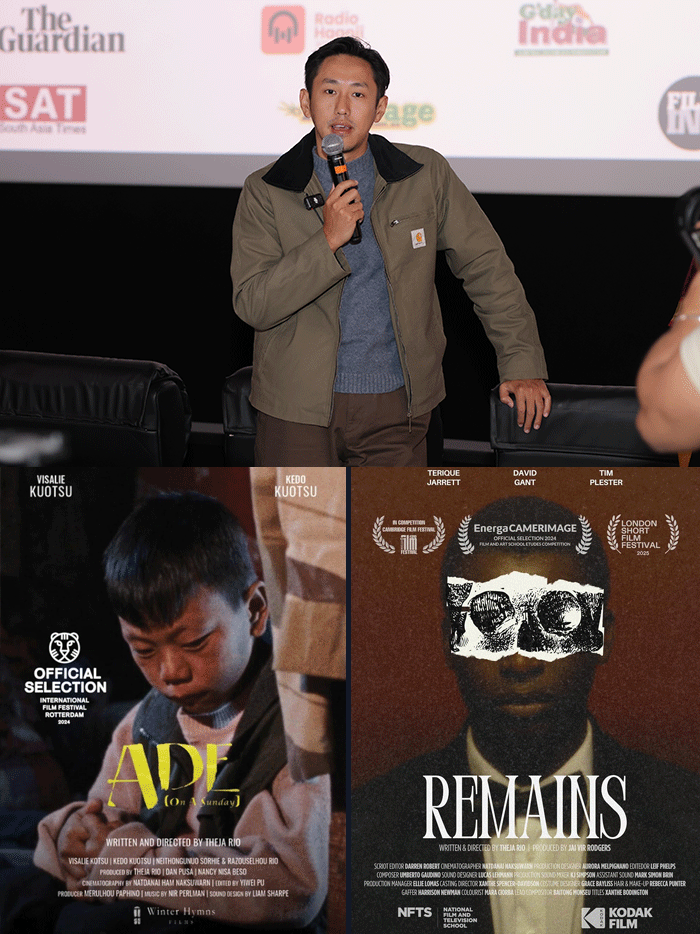
When IFFM audiences sat down for Changing the Narrative: Indian Indigenous Films: Cinema from the Margins, few could have predicted how quickly the conversation would move from a festival panel to the Academy Awards. The session featured Theja Rio, part of a broader indigenous programming push at this year's festival that spotlighted Adivasi and tribal voices rarely given this kind of platform in Indian cinema.
Rio arrived in Melbourne with two of his short films in tow. Remains, his post-colonial genre piece made at the National Film and Television School, and Ade (On a Sunday), his 16mm coming-of-age drama set in Nagaland, both screened at IFFM as part of the Indian Indigenous Cinema package, alongside a personal introduction from the director himself.
That programming choice looks prescient now. Weeks after IFFM, Rio's debut feature Angh won the Platform Prize at the 2026 Toronto International Film Festival, beating out eleven other selections in TIFF's juried competition. The win came with more than recognition. From this year, Platform winners in a non-English language qualify automatically for the Best International Feature Film category at the Oscars, which means Angh now heads into the 2027 race alongside India's official submission, Gondhal.
The film itself is an extension of the same story Rio has been telling since 2021, when his short film of the same name earned a special mention at Clermont-Ferrand. Angh is set in 1960s Nagaland and follows a Konyak village chief and his son as an American missionary's arrival pulls the community toward conversion and away from tradition. Shot on 16mm and spoken almost entirely in Konyak, it's a rare instance of a language and culture reaching international screens on its own terms rather than as backdrop.
For IFFM, the timing reinforces something the festival has been building toward for a few years now: a genuine commitment to the North-East and to India's tribal and indigenous storytelling, not as a token section but as work that can hold its own on the world's biggest stages. This year's line-up carried that further, with rare languages like Santhali and Tenyidie featured across the program, and Dear Awa bringing Singpho to an international premiere.
Rio's arc, from two short films screening in Melbourne to a Platform Prize in Toronto weeks later, is the kind of throughline IFFM's indigenous programming exists to create. It's proof that the stories the festival chooses to platform aren't just culturally significant. They're award-season significant too.